
Earlier this year, John McCain used John Mellencamp's hits "Our Country" and "Pink Houses" during stump speeches, until the Democratic singer asked him to stop. It's unlikely that the Republican candidate would find anything useful for his campaign on Life, Death, Love and Freedom. Mellencamp teamed up with producer T Bone Burnett to create a whole new sound — a set of textured, atmospheric folk and country blues that adds up to one of the most compelling albums of Mellencamp's career. There's not a bright, catchy riff or fist-pumping populist anthem to be found among these brooding, low-key songs about growing old, sick, lonely and pessimistic.
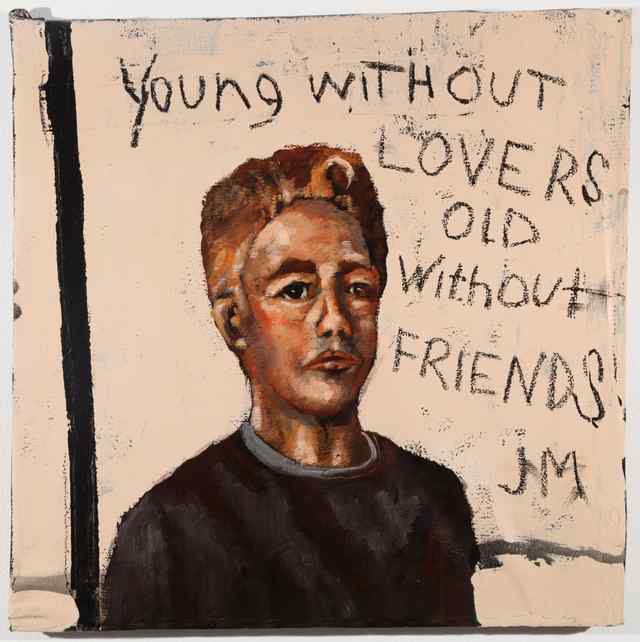
Burnett brings a fuzzy moodiness to the gospel hymn "If I Die Sudden" and the Springsteen-like "Don't Need This Body," both underpinned by distorted guitars and reverb-heavy leads. Politically motivated songs like "Jena," about the racially charged Jena 6 trial in Louisiana, and "Young Without Lovers," a more general plea for tolerance, sometimes strain to deliver a Big Message, with lines like "Let the people have the right to be different." But Mellencamp excels at the simple tunes: the twangy "My Sweet Love," kick-started by a big Bo Diddley beat and sweetened with female harmonies, and "A Ride Back Home," his desperate plea to Jesus over spare, ragged guitars. Life's dark undertones may not make for easy listening, but Mellencamp's raspy drawl has only gotten more soulful with age.
John Mellencamp, 56, is feeling his age and then some on “Life Death Love and Freedom.” It’s an album presented like a deathbed testament: bleak, solitary, bluesy and unbowed. In “Don’t Need This Body” Mr. Mellencamp sings, “All I got left is a headful of memories/And a thought of my upcoming death,” and that just about sums up the album.
Everywhere he looks he sees shattered expectations and looming sorrow, both in his own future and in the wider world. And where, in decades past, he would shrug off any odds against him and come up grinning, now he strives for simple perseverance. It’s a brave album in the way it sets aside all his old consolations.
His voice is gruff and weary, with a craggy matter-of-factness replacing his old swagger. The album was produced by T Bone Burnett, and it shares the rootsy, spooked tone of Mr. Burnett’s 2007 production “Raising Sand” by Robert Plant and Alison Krauss. This album’s most upbeat track, “My Sweet Love,” is rockabilly heard from afar, a love song with a queasy undertow: “It sure would feel good to feel good again,” Mr. Mellencamp sings.
In the new songs he trades his familiar brawny rock for sparser settings, like the bluesy riff and echoes of “If I Die Sudden” and the Celtic-Appalachian modality of “Young Without Lovers.” Mr. Burnett disassembles Mr. Mellencamp’s usual sound, placing his own down-home guitar within the band and, for nearly half the album, devising arrangements without drums. Mr. Mellencamp can still come up with blunt, righteous choruses — like those in “Jena,” a song about racial confrontation in a Louisiana town — but on this CD he underplays them, as if he’s all too aware of every limitation.
Mr. Mellencamp’s tour is due Thursday at the Jones Beach Theater in Wantagh, N.Y., and Friday at the PNC Bank Arts Center in Holmdel, N.J. JON PARELES
John Mellencamp isn't afraid to face death in his bold and bluesy new CD.
John Mellencamp has mortality on his mind of late. He may have titled his new CD, "Life, Death, Love and Freedom," but it's the second word that gets the most emphasis, and draws the most alarm.
"Just put me in a pine box/six feet underground," Mellencamp brays in "If I Die Sudden." "Don't be callin' no minister/I don't need one around."
In "Don't Need This Body," he talks flagrantly about his "upcoming death," and proclaims "this getting older ain't for cowards," while in the album's first track, he sings "Life is short/even in its longest days."
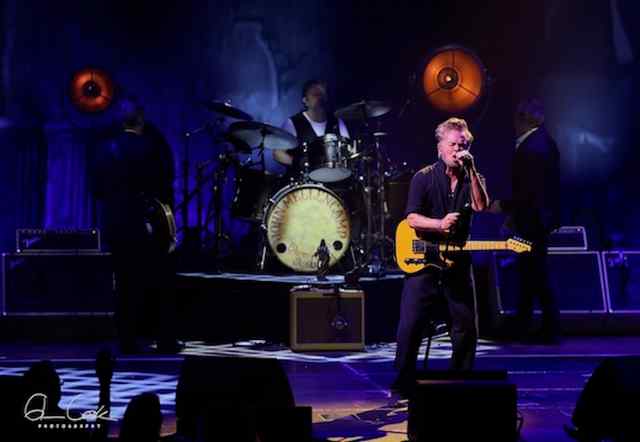
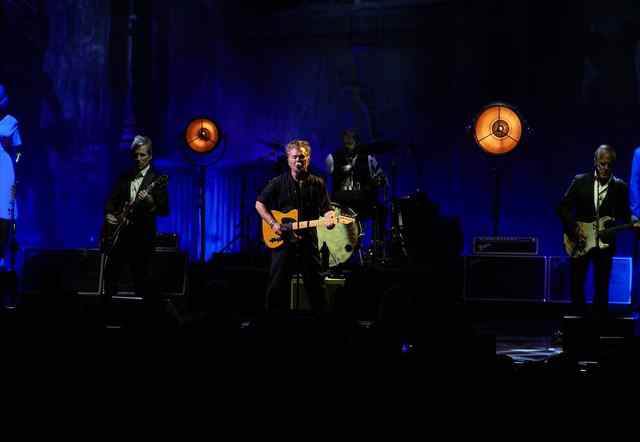
It's not exactly bouncy summer concert fare. But that hasn't stopped Mellencamp from featuring a clutch of these tough-minded new songs on his current, otherwise hit-driven tour, which parks at the PNC Bank Arts Center tonight.
"I'm not so sure that one should personalize this album," Mellencamp wrote to the News in an e-mail. "But definitely at age 56, the youthful bravado that one once carried has been replaced by a more mature understanding or lack of understanding of one's life."
Besides, it's not like Mellencamp hasn't come close to this road before. In 2003, he put out a rattling blues CD, "Trouble No More," that had the backwoods yowl and morbid truth of the form's earliest expressions. The disk didn't sell, but it scored high creatively. Mellencamp inched back toward the mainstream with his follow-up CD, "Freedom Road," even going to the extreme of selling one song ("Our Country") to a car commercial, which earned howls of outrage from some.
As if in reaction, the new CD (out Tuesday) swings back to the blues, but this time in an even more bold and personal way. Where "Trouble No More" found the heartland rocker covering the likes of Willie Dixon and Robert Johnson, "Life, Death ..." features wholly original takes on blues and folk. It boasts the ideal producer for the task: T-Bone Burnett, the premier roots dial-twister of our time. He has overseen everything from the "O Brother" soundtrack to the recent hit collaboration between Robert Plant and Alison Krauss.
For Mellencamp's CD, Burnett helped craft a raw and splintery sound that makes full use of the singer's deepening vocal expression. He made sure the listener can savor every bit of it by releasing the album as a two-disk set, with one part a DVD that has a sound identical to the original master tapes. It's the first music released in this form.
The results straddle the harrowing and the beautiful. The melody of the ballad "Longest Days" may be Mellencamp's most caring, while a song like "If I Die Sudden" revels in his rougher blues rasp.
The CD isn't entirely devoted to dirges. Several peaks of hope poke through. But its power comes in its unflinching will to stare into the void - to face fear with both a cower and a sneer.
********************************************** John’s newest video “Troubled Land” from his album Life, Death, Love, and Freedom
Searching for a ray of lyrical light in John Mellencamp's latest treatise on the state of the world proves consuming—but largely fruitless. That, however, makes the album all the more compelling. Its unrelentingly bleak landscape, populated by plain-spoken narrators and richly detailed characters and settings, leans more on the death part of the title equation, with pointed side trips into the political climate ("Young Without Lovers," "Troubled Land," "Without a Shot" and the particularly specific "Jena") and philosophical essays like "John Cockers" and "For the Children," in which Mellencamp seems to question his own capacity for the continuing struggle. T Bone Burnett's austere and atmospheric production brings a fresh kind of texture to the performance aspects of Mellencamp's songs, and his bonus DVD mix in the new HD CODE format lives up to its promise for richer and more articulated sound quality.—Gary Graff
By Sean Daly, Times Pop Music Critic
In print: Sunday, July 27, 2008
Album: Life Death Love and Freedom (Hear)
In stores: Now
Why we care: Much like the mystic juju he conjured up for Robert Plant and Alison Krauss' Raising Sand, voodoo priest/super-producer T Bone Burnett slathers Mellencamp's new album in the same Southern Gothic swamp stank.
Why we like it: The 14-tracker grooves with resonator geetars, rattling bones and things that go bump in the subconscious. Mellencamp sings about kids getting stabbed at county fairs, politicians spiking the Kool-Aid, old men praying for death. But Burnett often saves John from himself, summoning a dead man's party to go with the so-serious words.
Reminds us of: Jack and Diane as groom and corpse bride.
John Mellencamp delivers a message that many probably don't want to hear, but he's been doing that his entire 30-plus-year career.
The messages in this 14-track disc are often simple, mixed with the perfectly suited music that anchors them, from "life is short, even in its longest days" to "why do so many suffer; oppressed to the end of time; why does freedom move so slowly, unable to speak its mind." Acoustic melodies, mixed with beautiful harmonies with Karen Fairchild, are shown on songs such as "My Sweet Love."
For those who have loved Mellencamp since he was singing about needing a lover who didn't drive him crazy, his latest compilation should touch any generation. Sure, the Indiana rocker mixes words of pessimism, like being stabbed to death in "County Fair" by someone who "I can't remember who he was," but he also offers hope with his raspy, lingering voice in "A Brand New Song."
Thanks for these new songs, John. They'll resonate for a long time.
- Toni Guagenti, The Pilot
Rating: Go get it now
Tracks to download: "Longest Days," "My Sweet Love," "Don't Need This Body"
An album titled Life Death Love and Freedom should be approached with much trepidation, doubly so if said album is by John Mellencamp, who gave up singing little ditties about young, Heartland lovers in favor of large, flag-waving jingles about Chevy trucks. So it’s no great surprise to discover how soberly Mellencamp tackles the big issues raised in the album’s title. (Presumably, he thought Life Death Love Freedom and Taxes would be pushing it.) It is, however, something of a mild shock to find how good this album actually is.
Produced by the ubiquitous T Bone Burnett, the disc is decidedly low-key, with understated guitars and organs complementing the singer’s morbid, reflective lyrics. “Life is short even in its longest days,” Mellencamp intones, and he ain’t kidding. When he’s not staring down the Reaper, Mellencamp proves he’s still a man of the people, as on the topical “Jena” and the jaded but rewarding “My Sweet Love.”
Standout Tracks: “My Sweet Love,” “If I Die Sudden”
********************************************** Life, Death, Love and Freedom Documentary
By MICHAEL McCALL, For The Associated Press Mon Jul 14, 4:42 PM ET
Induction into the Rock and Roll Hall of Fame apparently incited John Mellencamp to obsess on mortality. He responds with "Life, Death, Love and Freedom," the most somber album of his 32-year career, offering bass-heavy, rumbling blues and dark-hued acoustic stomps that explore death, relationships and the dark clouds hovering over such ongoing concerns as liberty, equality and peaceful coexistence.
Working for the first time with veteran producer T Bone Burnett, Mellencamp moves away from the anthemic roots-rock and Midwestern soul music he's built his reputation on. Burnett envelops him in the same misty, reverberating twang used so well on Robert Plant and Alison Krauss' "Raising Sand." But Mellencamp uses that sound for an album of midnight ramblings that are less playful and more ominous.
The core songs address death directly: "Sometimes you get sick, and you don't get better," he sings in the opening "Longest Days." "If I Die Sudden" features lyrics as blunt as its title, while "A Ride Back Home" asks Jesus to deliver him once he's gone. Another song, "Don't Need This Body," starts with "This getting older ain't for cowards," then bemoans that he and his friends won't be around much longer.
Not everything is so bleak: "A Brand New Song" acknowledges life's difficulties while saying we all must work to find he best in ourselves and others, while "For The Children" is a prayer for a future of less suffering and more humanity — after he's gone, of course.
CHECK THIS OUT: "My Sweet Love," the album's one true upbeat tune, is a paean to the enduring spirit and connection to his wife, photographer and model Elaine Mellencamp, set to a Buddy Holly beat and sung as a duet with Karen Fairchild of Little Big Town.
Jim Abbott | Sentinel Music Critic - July 13, 2008
John Mellencamp is a new member of the Rock and Roll Hall of Fame, but the singer-songwriter has always possessed a depth that goes beyond rock clichés.
At its core, Life Death Love and Freedom isn't a rock album, no matter how much the frisky "My Sweet Love" shimmies with Buddy Holly style. There's an understated intensity in T Bone Burnett's production that's reminiscent of Bruce Springsteen's Nebraska in the solitary "Longest Days."
At other points, Mellencamp enlists evocative percussion and an assortment of musical toys -- melodica, resonator guitars, accordion -- to add flesh to the album's acoustic structure. As a vocalist, his tenor has aged into a weathered, expressive instrument that wraps itself around plaintive ballads such as "Young Without Lovers" and "John Cockers" like a modern-day bluesman.
On the pseudo-spiritual "Don't Need This Body," Mellencamp sounds as if he's channeling Woody Guthrie, if the folk icon had been accompanied by a haunting distorted guitar. The song doesn't rock, but it's one for the ages.
Despite the expansive title, there’s no room for Jack and Diane, barn-burning dance tunes or Zippo-raising heartland anthems on this dead-serious Life force, one of Mellencamp’s finest efforts to date. Produced by T Bone Burnett, who helped develop its high-definition CODE audio technology, the album winds down a dark, rootsy path of folk, country and haunting blues borrowed from Robert Johnson. In a twangy rasp, Mellencamp reflects with pessimism and regret, but he’s full of fire and purpose, whether offering scrappy prayer A Ride Back Home, brooding hymn If I Die Sudden or the politically charged Jena, based on racial friction sparked by a noose draped from a tree in Louisiana. This time, Mellencamp’s pink houses come with foreclosure signs. — Edna Gundersen
Fresh from induction into the Rock and Roll Hall of Fame, the plainspoken poet of the heartland continues to prove why he deserves that honor. Whether it's an impeccable turn of phrase or mesmerizing melody, Mellencamp finds plenty of inspiration on this glorious and haunting effort, produced with typically idiosyncratic skill by T Bone Burnett.
Eschewing any concept of "radio ready" and singing with a gruff immediacy, Mellencamp tackles all of the titular concepts on this folk- and blues-based material with a sense of liberation that is keenly palpable. Death, especially, is a popular topic. Mellencamp, 56, approaches it with calm contemplation on the meditative "Longest Days." He prepares for it with curmudgeonly attitude and gratitude on the dark, rumbling "If I Die Sudden" and even longs for it on "A Ride Back Home," in which Jesus serves as kind of a bouncer and celestial taxi service to the pearly gates.
Mostly written in two weeks and recorded in about the same amount of time, these vivid stories tell of people in various stages of living and dying who have learned a thing or two worth passing on. The album also comes with a DVD version, the first release in a new high-quality audio format called CODE, created by Burnett and a team of engineers. It indeed sounds warmer and more present than its CD counterpart. [Sarah Rodman]
John Mellencamp Life, Death, Love and Freedom; out July 15 Whereas once his indignation was trained on factory bosses, now it's Mellencamp's own broken-down self that's got him pissed. Producer T Bone Burnett creates delicate acoustics and puts the singer's disappointment ("Well I used to have some values") center stage. It will not brighten your day, but it's his best in a decade. A-
It’s one of rock’s great ironies that John Mellencamp is known largely as a purveyor of populist anthems in the vein of “Pink Houses,” “Small Town” and the like. Throughout a quarter-century career that hit an early peak with 1985’s “The Lonesome Jubilee” and has stayed remarkably consistent ever since, the former Johnny Cougar’s best work has always been in the dark, American gothic idiom, despite the “everyman” ethos his biggest hits have suggested.
“Life Death Love and Freedom,” out today is Mellencamp’s first record for the forward-looking Hear Music label. It may indeed be the darkest work among a canon that has sought to examine the dark underbelly of the American Dream.
Mellencamp does excel at conjuring rootsy rock tunes with indelible pop choruses — indeed, they’ve made him the most money of any of his songs and are likely responsible for the maintenance of his still-massive popularity. But when the final tally is taken of the man’s work, the Indiana native will be remembered as a chronicler of existential despair, a folk-based stoic whose best work suggests that life’s treasures are fleeting, and only a form of world-weary-but-stubborn “faith in transcendence” makes life worth living.
That’s a bitter pill to swallow, but Mellencamp ingests it with the same voracious appetite that has made him one of rock’s most loyal chain-smokers this side of Keith Richards. Clearly, he expects his audience to do the same. “Life Death Love and Freedom” finds him dishing out knotty complexities by the plateful. It’s easily his strongest album, from a lyrical standpoint at least, since the unjustly overlooked masterpiece “Human Wheels,” released in 1993.
From the point of conception onward, there was no way this disc could lose. Overseen by the estimable hands and ears of T Bone Burnett — on a hot streak following the wonderful Robert Plant/Alison Krauss project “Raising Sand” — the record’s sonic textures masterfully mirror its philosophical concerns. These, as the album’s title suggests, aren’t exactly centered on the standard rock tropes, i. e., girls and good times, etc.
Not since Bruce Springsteen’s “Nebraska,” in fact, has an American folk-based rock record offered such a bleak metaphysics.
Springsteen reacted to the onset of the Reagan era by retreating to his New Jersey bedroom and sketching character studies around remorse, poverty, murder, despair, and the bankrupt state of the American Dream. Mellencamp reacts to the tenure of Bush and Co. in an equally visceral nature, digging into the rich tradition of the Southern gothic school, where he excavates a world view in which hopelessness reigns as king, and man is beset by ill-intended forces from both without and within.
The album commences with stark acoustic guitars and a naked Mellencamp vocal intoning a front-porch folk ballad, one recalling his fondness for the Book of Ecclesiastes — which, interestingly, he quoted in the sleeve notes for “The Lonesome Jubilee” 23 years ago. That poetic tradition suggests that human life is a flawed concept — marked by equal portions of joy and tragedy, and over too soon, to boot. (“Nothing lasts forever/And your best efforts don’t always pay/Sometimes you get sick and you don’t get well/That’s when life is short, even in its longest days.”)
The sun never quite peeks through the clouds from there on out.
“If I Die Sudden” is a winning rewrite of the old blues piece “In My Time of Dying,” which Mellencamp covered previously. In it, the narrator insists that no one make a fuss when he kicks the bucket, as “this life’s been right to me/I got a whole bunch more than I deserve.”
“Troubled Land” is a portrait of contemporary America, but unlike Mellencamp’s most recent hit, “Our Country,” it doesn’t beg to be misunderstood as a flag-waver. “Beware of those who want to harm you/and drag you down to a lower game,” the singer warns, but the suggestion that “the truth is coming to bring peace to this troubled land” sounds less like an optimistic platitude than a disgusted clinging-to-belief.
Other songs — “John Cockers” and “A Ride Back Home” — are bleak, but Mellencamp seems to take perverse pleasure in delivering it. One can hear him smiling as he delivers the news, like some weatherbeaten town crier whose only pleasure comes from being able to offer the final “I told you so” to a populace he simultaneously despises and loves. As a half-Irish Romantic type, I laugh along with him, but it’s doubtful the average Mellencamp fan clamoring for “R. O. C. K. in the U. S. A.” will find the humor in this, black as it is.
Musically, “LDL&F” is much more dynamic than one might expect from what has been billed as an acoustic record. It never devolves into the state of torpor that so many low-key affairs centered on tragedy find themselves succumbing to. That has much to do with the way Burnett has chosen to subtly, but colorfully, adorn Mellencamp’s songs with rich, ambient guitars (including the contributions of Mellencamp band members Andy York and Mike Wanchic), warm upright bass, tasteful vocal harmonies and the like. In this world, the Buddy Holly-inspired rocker “My Sweet Love” sounds positively celebratory, even though its lyric is concerned with the ambivalence of enduring romantic entanglement.
“Life Death Love and Freedom” is not likely to win Mellencamp any new fans, so demanding is its presentation, and so unflinchingly despondent is its world view. It is, however, exactly the sort of record Mellencamp should be releasing today, one that consistently plays to his strengths as writer and singer. Like his past masterpieces, its honesty and lack of artifice feel cathartic. This is Mellencamp at his best.
One of America’s original journeyman rockers—a distinction shared with Springsteen, Fogerty and Seger—John Mellencamp begins his affiliation with superstar-laden Hear Music by pulling up roots and returning to the heartland. Of course, Mellencamp’s Everyman attitude has generally reflected homespun values, from the compelling refrain of “Pink Houses” lamenting suburban sprawl to the populist appeal of “R.O.C.K. in the U.S.A.” and the sepia-tinged nostalgia cushioning “Jack and Diane.” But while albums like Scarecrow and The Lonesome Jubilee have found him traversing equally rustic terrain, the lack of commercial concern is especially apparent here.
Consequently, this set of revisionist folk songs is so immersed in authenticity, it could have been spawned in the Mississippi Delta or ripped from Woody Guthrie’s songbook. With the venerable T Bone Burnett behind the boards, the parched, stripped-down settings befit these weathered tales, even as Mellencamp’s coarse vocals echo the weariness and woes the album’s sweeping title implies. The turgid rumination imbued in “Longest Days,” “Young Without Lovers,” “Without a Shot” and “Country Fair” may surprise, and indeed, there’s little evidence of Mellencamp’s radio-ready past … the soulful sway of “Mean” and “Troubled Land” notwithstanding.
A bonus high-definition DVD offers enhanced sound, but ultimately, it’s the unlikely mesh of intimacy and insurgency that affirms Mellencamp’s status as an American original. —LZ
FOR FANS OF:
Bruce Springsteen – Devils and Dust
Bob Dylan – Time Out of Mind
Steve Earle – The Mountain
**********************************************
People Magazine Critic's Choice - 7/12/08
3 1/2 out of 4 stars By Chuck Arnold
Having been inducted into the Rock and Roll Hall of Fame this year, John Mellencamp could certainly be forgiven for coasting a bit on the memory of Jack and Diane. Instead, the heartland rocker has released one of his best discs in years. On the stark, stirring meditation on Life, Death, Love, and Freedom, Mellencamp pairs up with Grammy winner producer T Bone Burnett (“Oh Brother Where Art Thou”) who brings a rootsy realness to the music and digs out some of the grittiest vocals ever from the singer. Meanwhile, Karen Fairchild of the country group Little Big Town provides vocals on four songs including first single “My Sweet Love”, a little ditty about down home romance. DOWNLOAD THIS: "Longest Days," a spare, Springsteen-esque ballad.
Welcome to Mellencamp.com
Life, Death, Love and Freedom:
John Mellencamp's new album, Life, Death, Love and Freedom, produced by T Bone Burnett, is in stores NOW! » DETAILS
John Mellencamp 2008 Tour:
John and his amazing band are touring the world behind his new album.
» DETAILS
As 2008 draws to a close, I want to thank you all for staying with me through another year.
We all know that things have been pretty dark in our country lately, but even at a time when so many of us are hurting bad, people kept coming out to see me and the band and buying our records and visiting our web site. I really can’t thank you enough.
But looking ahead to 2009, we definitely have something to feel good about, to feel hopeful about. It’s hard not to be cynical—especially regarding politicians—but for the first time in eight years we have cause for optimism. But we still can’t rely only on politicians—it all starts with ourselves: We need to look deep inside ourselves and find what we believe in, what we want for our country, and what we can do to make it happen.
So Elaine and I thank you for all your continued support and wish you all a happy holiday time. And let’s all do whatever we can to help our new president bring peace to this troubled land.
For many of us, no doubt, 2008 couldn’t end soon enough. But fans of John Mellencamp had plenty to cheer about.
The biggest story, of course, was John’s induction—finally!—into the Rock and Roll Hall of Fame on March 10. Fellow Hall of Famer Billy Joel did a great job in ushering John into rock’s pantheon, but John had already made it clear that he would not rest long on his new laurels.
Indeed, following the December, 2007 announcement of his induction, he kicked off 2008 bigtime with a Jan. 25 benefit performance at the Housing Works Used Bookstore in Manhattan’s Soho neighborhood. The intimate show was part of the bookstore’s celebrated concert series in support of its nonprofit AIDS service organization, and was attended by an SRO crowd of 200.
In February he previewed new material during a Canadian tour with Tom Cochrane & Red Rider (which featured the debut of his then 12 year-old son Speck, who played guitar on “Authority Song” during the final show of the tour in Victoria, British Columbia). The new songs surfaced on July 15 with the release of “Life, Death, Love and Freedom.” John’s 22nd album was his first to be produced by T-Bone Burnett, and debuted at No. 7 on the Billboard Top 200 album chart (selling some 56,000 copies in the first week). Released in both analog and Burnett’s new high-definition CODE format, the disc garnered rave reviews and went on to make numerous Top 10 album lists in December—including a No. 5 placement on Rolling Stone’s year-end listing of the best albums of 2008.
John spent a busy late summer and fall promoting “Life, Death, Love and Freedom.” Numerous national TV appearances included “Late Night with David Letterman,” “The Tonight Show,” “Good Morning America” (for which he performed on two occasions) and the CBS “Early Show.” He also toured the U.S. following the album release, with Lucinda Williams opening.
To further support the album, John produced videos for key tracks “My Sweet Love” and “Troubled Land,” both filmed primarily in Savannah, Ga. But he also produced a stripped-down, website-only video at home for “The Times They Are a-Changin’,” the classic 1960s anthem by his idol Bob Dylan that was the rallying cry for his generation. The video, which featured John solo on acoustic guitar, perfectly fit in with the presidential campaign’s paramount theme of “change” and received intense media attention—as did a similar home-made follow-up video for “Life, Death, Love and Freedom” track “Troubled Land,” which became the first music video to premiere on The Huffington Post.
Meanwhile, John contributed his time and talent to support presidential hopefuls John Edwards and Hillary Clinton—and the eventual president-elect Barack Obama. Besides singing at an Obama campaign rally, he made a radio ad backing him for Indiana listeners just in time for the election. Apolitically, he was also chosen to provide the after-dinner performance for the National September 11 Memorial & Museum at the World Trade Center's First Annual Notes of Hope Benefit Dinner on Sept. 9 at Lower Manhattan's Cipriani Wall Street restaurant--only blocks away from Ground Zero.
On Sept. 15 John came to the legendary Apollo Theater in Harlem to tape an episode of “Spectacle: Elvis Costello with….” Part of Costello’s novel music/talk show series for the Sundance Channel, the program departed from the norm by teaming John with Rosanne Cash, Kris Kristofferson and Norah Jones in swapping songs and stories with the esteemed host.
John’s performance at Farm Aid 2008, held Sept. 20 in Mansfield, Mass., was said by many to be his best Farm Aid showing in years. Three days later he returned to the 700-seat Crump Theatre in Columbus, Indiana, for a special concert to be included in a documentary entitled “Homeward Bound: John Mellencamp.” The program, which involved interviews with John, former and current band members, boyhood friends and school classmates, focused on his early career years and aired on the Bio Channel in December (the channel had shown an earlier documentary, "Life, Death, Love and Freedom," which chronicled the making of the album, in July); Mayor Fred Armstrong proclaimed Sept. 23 as John Mellencamp Day, and noted that the first—and last—time John Mellencamp played the 700-seat Crump Theatre in Columbus, Indiana was on Oct. 4, 1976, when the then John Cougar was supporting his debut album “Chestnut Street Incident.”
Following the Crump show, John stopped in Washington to play a YouthAIDS benefit and then headed on to the U.K. for his first promotional efforts there since 1992 and “Whenever We Wanted.” On Oct. 6, he received Q Magazine’s prestigious “Classic Songwriter” title at a star-studded awards show at London’s Grosvenor House Hotel—the award being presented personally by Q editor Paul Rees. Other London activities included an appearance with Coldplay and Glen Campbell on the popular “Later…with Jules Holland” BBC-TV program tomorrow (on his 57th birthday!) and a performance at the famed Borderline club.
It was announced in late October that John had been nominated for the first time for induction into the Songwriter’s Hall of Fame in New York, in the Performer/Songwriters category. Then on Nov. 5 he joined millions of Americans in expressing a mixture of disbelief and joy at Obama’s historic election to the presidency. “This for me is something I never thought I would see in my life,” he said in remarks that were widely publicized.
On Nov. 15 John commenced a whirlwind month-long tour of Australia and New Zealand with Sheryl Crow opening, closing out the year by playing to as many as 10,000-plus fans each night during his first concert appearances Down Under in over 15 years.
And what’s in store for 2009? In an end-of-the-year conversation, John indicated that plans are underway for a long-awaited boxed set. A video for “A Ride Back Home” is also in the works, as is a live album culled from his 2008 concerts at the Greek Theater in Los Angeles, in Sydney, Australia, or both. And work continues on John's much-anticipated musical collaboration with Stephen King, "Ghost Brothers of Darkland County," with T Bone Burnett now on board as musical director.
I couldn’t find the Bio Channel on my cable system—which doesn’t mean it wasn’t there!—but as I’d been interviewed at length for “Homeward Bound: John Mellencamp” (half an hour, at least!) the producer sent me a copy. I only decided to watch it, though, after notifying everyone I knew about it (“Hey! I’m gonna be in this GREAT John Mellencamp documentary”), especially those I knew back in Wisconsin when I first started telling people about Johnny Cougar (“See! I TOLD you he’d be a big star—and more important, look how big I am!”), only to hear back, “But you were only in it for maybe 10 seconds!”
Yes, maybe it was 10 seconds, total, in two appearances—but pure genius, of course. “They see themselves, they hear themselves in his music,” I say right at the beginning—at least I think it’s me, talking about John’s fans and their incredibly close relationship with him. But it’s a voiceover and I’m not really sure (mainly because even after over 25 years of living in New York I still sound like I just got back from milking the cows). But the unidentified guy on screen who follows, who looks well into his 80s, is definitely me: “He’s traveled all over the world but he’s always come back to Indiana!” Brilliant!
But enough about me—for the moment. Having indeed followed John since the Cougar days, I thought I knew just about everything about him. Not true. “Homeward Bound: John Mellencamp” taught me plenty, particularly the pivotal “Johnny Cougar Day” event preceding his initial appearance at Seymour’s Crump Theater. No wonder people hated him. And no wonder he hated Johnny Cougar.
I, on the other hand, loved John Cougar. Loved the “John Cougar” album (still such a great cover shot, staring out right at you with the lit cigarette dangling from his mouth!) and the first shows I saw him do in support of it at Headliners in Madison. He was great even then.
But “the people in Seymour thought he was a joke—a complete joke—[and] laughed at him,” noted former bassist Robert “Ferd” Frank in “Homeward Bound,” referring to the 1976 “John Cougar Day” festivities, and it’s easy to see why: It really was “a ‘Spinal Tap’ moment,” as Mike Leonard of the local Herald Times put it, what with the record company flying out national press to see John Cougar and his Tiger Force Band (what a band name!) parade through town—accompanied by the “Cougarette” girls in their yellow “COUGAR” t-shirts.
“How much longer are we gonna talk about this [bleep]?” John asked the interviewer before recounting the “humiliating” experience of the forced drive down Chestnut Street, two days before his first and only Crump Theater performance until his triumphant return there in September to tape the special concert performance for “Homeward Bound.”
“We wanted to burn the clothes we had on,” he continued. “It was a creepy situation, but at the same time, as creepy as it was, here it is 35 years later and without that beginning I don’t think we’d be here today. It enabled me to see real quickly what it was that I would never do again and what I won’t do, and made it very easy for me to say ‘no.’”
All this time I never fully understood why he hated “Johnny Cougar” so much. But I do now. And I have a much better understanding of how he transitioned into the groundbreaking singer-songwriter-bandleader that is John Mellencamp.
“It took a few years and a few albums for him to go away from the John Cougar made-up image,” said the 80-year old man. “He became, really, himself—John Mellencamp.” Such insight! I couldn’t have said it better myself…oh, yeah, that is me! Egad! Can my hairline recede any further? Will I look younger if I dye my beard? Have the cows come home?
Thank God it was only 10 seconds, but there were two or three other things I said that missed the cut that I want to claim credit for.
I know I recalled the phenomenal Mellencamp crowd response that you get a taste of when he comes out at the Crump show. I singled out one time when he came out at the New Jersey Meadowlands Arena, in the early or mid-‘90s, when the crowd stood and cheered for at least five minutes before John and the band hit the first note. It really was an extraordinary expression of love and appreciation that John graciously accepted (he made a few token efforts to start the show that only served to up the volume) that I’ve never witnessed for anyone else.
Then I talked about the songs, maybe mentioning a conversation with John when we agreed that melody and not lyrics is what hooks the listener. He expounded on this in “Homeward Bound” when he noted how he always makes sure his melodies are “singable enough” that anyone can sing along to them. I also found his comment—and “Pink Houses” demonstration--that all his songs begin as folk songs quite illuminating.
And I know I spoke about John’s rebel nature as an artist, and of course, product of the music business. But this, too, is covered extensively in a documentary that inevitably centers on the so-called star-making machinery of that business. Here, with John’s stated awareness that because of the breakthrough pop success of “I Need a Lover” and his regrettable Johnny Cougar name and image, he would never be taken seriously by the rock critic establishment until he made records that were “so undeniably popular that they had to deal with us,” it becomes an invaluable lesson in pop stardom, administered by someone who clearly never wanted to be a pop star.
“Longest Days” - John Mellencamp: Mellencamp’s full-circle tale of life’s hopefuls descends into harsher realities when “you know you got no flame.” He opens up his soul to a new level of craftsmanship through a worn guitar and his raspy, twang-laden voice. Click HERE to see the full list.
Writer Brandon Daviet (who also writes for Colorado’s The Marquee entertainment magazine) placed LDL&F as his top album of 2008.
Number One: John Mellencamp / Life, Death, Love and Freedom - John Mellencamp promised and delivered with what might not be the year’s most danceable record but is certainly its most important. With a country in financial turmoil tracks like “Troubled Land” and “Longest Days” accurately reflect the emotions of many Americans. Other songs like “If I Die Sudden” tackle the loss of faith, while the politically charged “Jenna” is an open letter against racism. In a year when little Katy Perry has swept the charts with her pseudo-lesbian fantasies, Mellencamp manages to remind us that not everybody in America is incapacitated by simple pop ditties, shiny I-phones, and American Idol. Click HERE for his full list.
John’s new album landed at #11 on Saskatchewan's Leader-Post writer Jordan Zivitz's Top 20.
John Mellencamp: Life Death Love and Freedom (Hear Music) - An unflinching look at mortality and a world gone wrong, this late-career renaissance convincingly casts Mellencamp as a contemporary-folk great.
Click HERE to see his full list.
John’s 2008 album made the Schenectady (NY) Daily Gazette top album list compiled by music writers Michael Hochanadel and Brian McElhiney and features editor Dick Bennett.
John Mellencamp: “Life Death Love and Freedom” — The influence of producer T Bone Burnett is evident here in what may be the best album of Mellencamp’s career. It’s a darker, stripped down, more bluesy sound for the singer/songwriter who tackles such weighty subjects as racism in a small Louisiana town. (Bennett)
Click HERE to see their full list.
Variety.com writer Phil Gallo places John’s 2008 release “Life, Death, Love and Freedom” at #7 on his list of “50 albums released in ’08 that I am glad are in my collection.” Click HERE, to see his full list.
Buffalo News writer Jeff Miers praises John’s most recent album on his year end list:
John Mellencamp, “Life Death Love & Freedom” (Hear Music): Mellencamp is at his best when fueled by righteous anger. Here, the sympathetic production afforded by T-Bone Burnett helps to craft an instant classic.
Click HERE to read this article online.
The restless voice of ornery America, John Mellencamp has spent three decades
railing against injustice and conservatism. Now, on the eve of the US election,
MOJO find him contemplating his own mortality on the set of Elvis Costello’s new
TV show…
Words: Phil Sutcliffe, Portrait: Elaine Mellencamp
This article includes some great photos and should be available
at select bookstores and newsstands that sell import magazines.
“Do you know what’s been happening today?” John Mellencamp enquires, responding
briskly to a broad opening question about his “left-wing Democrat” politics.
Well, it’s September 15 in New York City and, thus far, leading investments bank
Lehman Bros has gone bankrupt, the Bank of Americas has rescued broke
stockbroker Merrill Lynch, and American’s largest insurance company, AIG has
announced it needs $80 billion pronto or it’s going to belly-up.
Assured that MOJO’s got the gist, Mellencamp proceeds with his smoke break cum
photo session in the cluttered alleyway behind the Harlem Apollo,
machine-gunning bullet points from a lifetime of raging against the system.
“While the liberals were worried about being politically correct, the
Republicans stole Wall Street,” he begins.
But you’re a liberal, aren’t you?
“Yeah, that’s what I’m sayin’, we’re stoopid! I’m Stoopid! We were thinking
about handicapped parking places while they were taking power.”
He’s not a city boy, though he’s true country from Seymour, Indiana. And as both
the official progenitor of “heartland rock” and, with Willie Nelson and Neil
Young, founding co-director of Farm Aid, he soon turns his thoughts back to
where it all went wrong for family farmers. Earl Butz did it, he says – that is,
President Nixon’s secretary of agriculture who switched subsidies from the small
holdings to agribusiness and advised the little people to “Get big or get out”.
The mention of Nixon reminds Mellencamp of his own “dumb” lack of commitment
back when, as a 17- year-old, he went to Washington for the 1970 May Day demo
against the Vietnam war. “I was goin’ pretty good until I saw this girl and then
“Oooooo(his head turns)… I didn’t make the march.” He sparks up his raspy
60-a-day laugh at this youthful folly.
His reminiscences are curtailed. It’s time to rehearse. Interview to be
continued as and when. He bounces downstairs towards the cellar dressing-rooms.
Entering the Apollo imparts that ‘hallowed-portals’ feeling. However, once
you’ve paused to admire the framed photo collages in the foyer – Smokey, Aretha,
James Brown on down – it’s just a small, comfortable, working theatre.
To the right of the stage a screen announces, “Spectacle: Elvis Costello with…”
A new 13-part TV series, it features as - live song and Elvis-led talk from
assorted big names he likes, including Lou Reed, The Police, Jakob Dylan, Herbie
Hancock and Smokey Robinson himself. In the America it will be carried by Robert
Redford’s Sundance channel; in the UK by Channel 4’s 4 Music in December.
On-stage, Costello is conducting a remarkable convivial rehearsal-spontaneous
and, as will later emerge, only approximately connected with what’s played on
the show itself. Costello is flanked by Kris Kristofferson, Rosanne Cash and
Norah Jones. Perched on stools, guitars on knees, they’re working up Johnny
Cash’s I Still Miss Someone. “What key are we in, darlin’?” grizzled-as God
Kristofferson asks Rosanne. She tells him. “I just need to know what I’m doin’
and so far I don’t, “he guffaws. Within 15 minutes uncertainty, bum notes and
squinting at the autocue have alchemised into a harmony chorus of hair-raising
loveliness.
Mellencamp appears stage left. He sits restlessly, straining at the leash of the
others’ after-you civility. At one point he declares he’s not much of a
collaborator: “I’m from Indiana and there’s nobody else there!” It shows. A good
job they all know and understand his edgy ways – plain-speaking but a touch
insecure at the same time.
The rehearsal closes with Mellencamp alone on –stage singing his 1986 Americans
hit Rain On The Scarecrow , one take and fiercely: “The crops we grew last
summer weren’t enough to pay the loans/Couldn’t buy the seed to plant this
springs and the Farmers Bank foreclosed/…Blood on the scarecrow, blood on the
plough.” Like his oldest hero Woody Guthrie, he doesn’t leave much to subtext.
Back with Mojo, Mellencamp – who some in the UK may recall from the ‘70s as
pop-rock icon (failed) Johnny Cougar – is talking about the rough ride a blunt,
political songwriter can face in America. “I updated an old folk song called To
Washington (Troubled No More, 2003), he says – his lyric suggests President Bush
is a warmonger possibly motivated by oil profits, “People were driving past my
house throwing shit and yelling and giving my wife Elaine the finger as she
drove down the street [in Bloomington, Indiana, their home for years].
“I was driving to the airport one day with the boys [about nine and eight then]
and they played the song on the radio. A listener calls and says, “I don’t know
who I hate the most, that fucking John Mellencamp or Saddam Hussein.” It really
freaked the kids out and it pissed me off. We had to get security to come around
the school playground because the teachers thought people might harm them.”
His lasted album – produced by T Bone Burnett – takes a more panoramic
perspective as is indicated by the title, Life Death Love and Freedom –
archetypal Americans song book themes, he says. In key tracks Longest Days, John
Cockers, Young Without Lovers and Don’t Need This Body, Mellencamp, 57 now and
survivor of a heart attack in the ‘90’s, writes first-person about age and
mortality. He creates bitter characters who prepare for their end cocooned in
stubborn, self-righteous isolation.
“This record is about life,” he asserts. “Part of life that we don’t really want
to think about. But Life, ultimately, is beautiful. That’s why I wrote the
songs. People say this is a dark record and I’m thinking. No, it’s about our one
shot at being here and it’s beautiful so if you can’t get that you’re not old
enough to be listening to this fucking record.
“That song If I Die Sudden goes back 20 years to an uncle of mine who died of
cancer at 58 from smoking. On his death bed he said, “I’m an atheists. Do not
have a preacher come here and say what a great Christian life I’ve led. I
didn’t.” For me that was like Wow! You gotta be pretty damn sure of yourself or
pretty damn stupid to say that. I couldn’t figure out which one it was.”
You’ve got to be pretty damn sure of yourself to make an album about dying.
“I don’t think so,” he crackles. “You’ve just got to be willing not to sell
record!”
It’s showtime the crowd’s in now and Costello’s chatting away on his stool, no
autocue. He explains the evening is modeled on a Nashville “guitar pull” where a
bunch of guitar-strumming pals sit around and try out their new songs, Rosanne
Cash adds, “I think they originated in my dad’s living room with Bob Dylan, Kris
and Waylon Jennings, Kris sang Me And Bobby McGee for the first time there.”
They take their turns solo, trio and quintet, Costello offering his unrecorded
road favourite Down Among The Wines And Spirits, Kristofferson the not entirely
unknown Sunday Morning Coming Down, and Norah Jones a new song co-written with
Ryan Adams called Light As A Feather. Then Mellencamp – not playing the
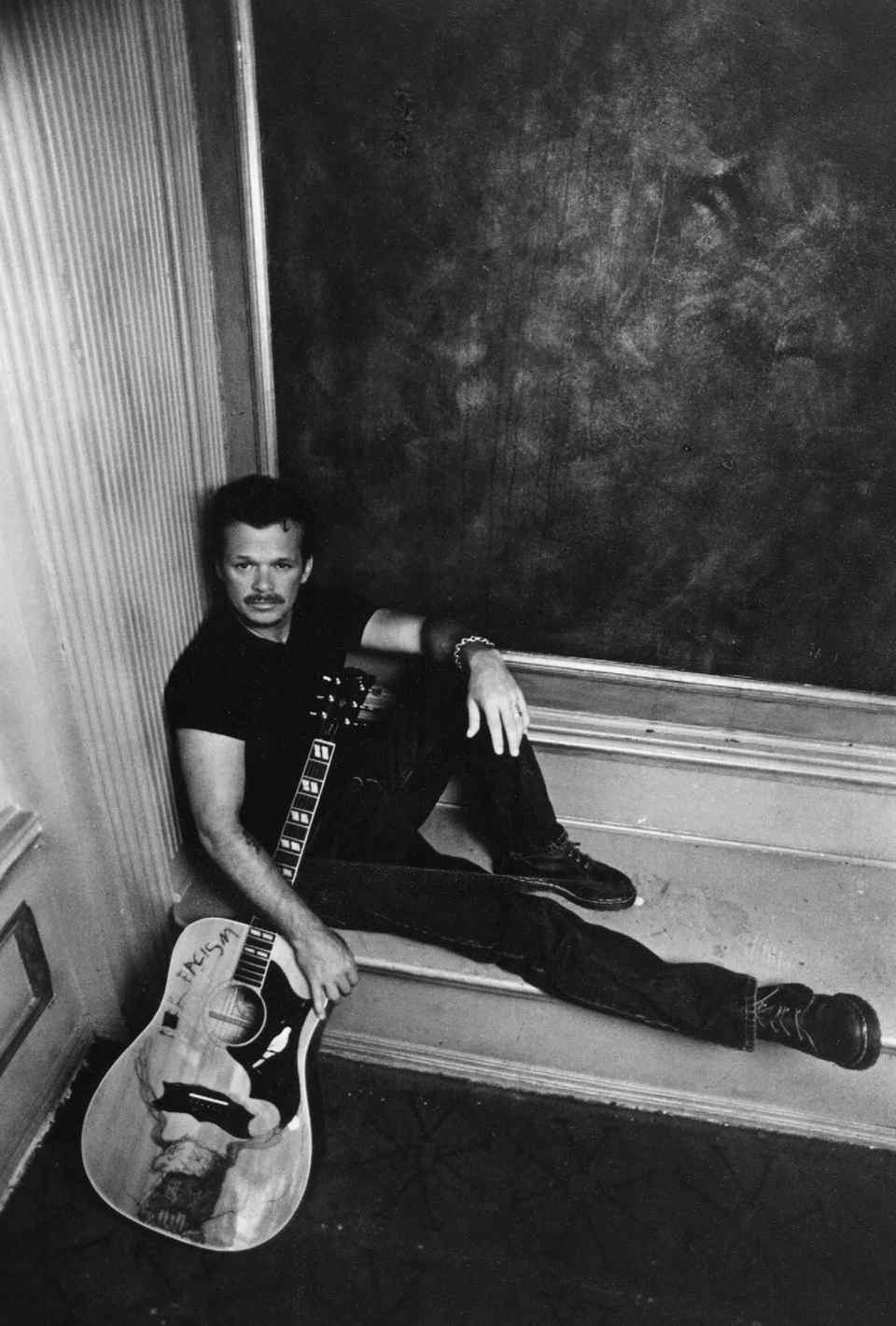
TV-unfriendly acoustic with “Fuck Fascists” scrawled above the strings – sings
Longest Days, from his new album, one of its gentler intimations of
impermanence. He forgets the title, blurts it out when he gets to the chorus,
makes a bit of a hash of it. When he finishes Rosanne reaches across to him and
says a few words as if kindly consoling him…
But that wasn’t the case, he explains later. “There were tears welled up in her
eyes and she said, “That’s something you mean.” I sorta said, Oh come on, ‘cos
my performance wasn’t’ great, but I saw her eyes…it was quite, uh…I’m glad….” He
trails off.
Everyone enjoys peer approval, but it may be extra important to Mellencamp
because of the demoralizing Cougar episode which “launched” his recording
career. In 1977 he came to London where David Bowie’s former manager Tony
DeFries reinvented him from the name upwards. Pin –up pop-rock when punk ruled,
“Cougar” succumbed because all he had back home was a wall papered with record
company rejection letters. The hype ruined his reputation in the UK and he feels
the taint remained even when he reverted to his real name and music he believed
in.
His next UK manager, Billy Gaff, Rod Stewart’s ex, persuaded him to part with
the publishing on his first 10 albums. When Mellencamp, back in the US, started
making hits, even $5 million wasn’t enough to buy his rights back. But by then
he’d begun the music life he craved. “Critics were never going to like Johnny
Cougar,” he says. “He was a fucking jerk. My only option was to make hits so big
I had to be accepted. I sat down with the band and said, Look, we’re 30 years
old, if we don’t quit fucking around, we’re gonna be out of business. Well, I
knew the bars of America because we played 300 of them a year. They wanted
something raucous. So we applied the smallest number of words, the lowest common
denominator, don’t try to make any big points: (sings) “Come on baby/make it
hurt so good.”
Hurt So Good, from John Cougar’s 1982 American Fool, hit Number 2 in the singles
chart. Then the LP reached Number 1 along with the Jack And Diane single “Two
American kids growing up in the heartland”, one of whom had been black until
Mellencamp decided to shelve such complicating notions.
Encouraged, and now stage-named John Cougar Mellencamp, he moved to phase two,
“With Pink Houses [from Uh-Huh, 1983] we went out on a limb, I said, Look, let’s
try and pull a fast one. Let’s write about what we really think of the United
States, but tie it up in a chorus. Made an anthem out of it…” And a Top 10 hit.
“At that point I realized, now I can start doing what I need to do, I wrote Rain
On The Scarecrow.
On stage the guitar pull proceeds good-naturedly via Me And Bobby McGee and
Mellencamp’s love-hate reflection on Indiana, Small Town. Closings, each of the
quintet takes a verse of Johnny Cash’s Big River. Mellencamp tears into his,
harsh and high, practically launching himself off the stool like a sprinter from
the starting blocks. The crowd roars. Then does it again for a couple of
retakes. The artist shake hands, hug and clap one another.
Afterwards, Mellencamp affirms he did enjoy this strange experience of
co-operation. Such company only reinforces his certainty the Life Death Love And
Freedom represents his future. “It’s about growing up to be Kris Kristofferson
or growing up to be a Willie Nelson,” he muses. He cuts loose a little then, in
grumpy-old man mode. Corporate America, he opines is “stealing our culture – the
same TV shows, the same stores, the same food, the same accents everywhere you
go.” Disneyland popsters have taken over music since “America turned its back on
rock ’n’ roll – now there’s only one record store in New York City! You can
download tracks, but who wants that? The quality’s so terrible!”
He crackles a last laugh and swings back to an experience that gave him food for
thought about his new album: “I had the strangest phone call. This friend of
mine calls me up about 11 o’clock at night and says, ‘This guy here wants to
talk to you’. It’s a famous actor who I’m aware is dying of cancer. I’m
thinking, what the fuck’s he want to talk to me about? Anyway, he says, ‘Hey
man, I’ve been listening to your album. It’s such a comfort to me.’ He says,
‘It’s made my life more bearable’. I didn’t know what to fuckin’ say.
“And my friend who’d been with him, he’s such a wise-ass, he rang the following
day and asked me, ‘What he’d say?’ I told him and he said, ‘Now you know what it
feels like to be a real artist’, I said Yeah. Thanks.”
A&E's Bio Channel has posted three outtake clips on their website from the recently premiered "Homeward Bound: John Mellencamp" documentary. The clips include John’s reflections on the first incarnation of the Johnny Cougar band, his worst gig ever, and his painting process and its application to music. Click HERE to view the clips on Bio.com.
John Mellencamp has completed his whirlwind month-long tour of Australia and New Zealand, and by all accounts it was a triumph. As a reviewer for The West Australian wrote of the tour-opening Nov. 15 “Evening on the Green” show at the Sandalford Winery in Caversham, “It would be easy to see John Mellencamp’s set simply as a collection of great songs. Here was a chance to apply metaphor to a body of work which still after all these years is pointedly relevant. But first, it was time to party a bit.”
Playing to as many as 10,000-plus fans each night, Mellencamp did indeed party down, to approximately 100,000 fans from the Sandalford show through the Dec. 7 tour finale at the Mudhouse Winery in Christchurch, New Zealand. The 12-show tour stops were in places Mellencamp had not visited in over 15 years—one reason, perhaps, as to why he was so talkative during the shows (especially regarding outgoing President Bush).
Tour highlights included his nightly performance of “I Need a Lover,” the song that essentially launched his career when it became a major hit in Australia ahead of Pat Benatar’s cover hit with the song in the U.S. “I’ve gotta play this song,” he explained each night on stage, “‘cause without it, I wouldn’t be here.” Mellencamp performed it Down Under in a shortened acoustic solo guitar version. He also performed “My Sweet Love” in duet form with his opening act Sheryl Crow.
Mellencamp’s young son Speck also came out at the end to play guitar on “Authority Song,” the set-closer until Mellencamp tacked on “Hurts So Good”—the first time he included the monster hit in concert since 2005. It served as a fitting end to his warmly-welcomed return to Australia and New Zealand.
“He may have 21 albums behind him, but Mellencamp is certainly no has-been,” concluded Western Australian Web site PerthNow. “He has grown beautifully into his music [and] this concert was a privilege to attend.”
Rock star and Bloomington resident John Mellencamp performs at the Crump Theater
in Columbus in this still from tonight’s 90-minute documentary special “Homeward
Bound: John Mellencamp,” airing on the Biography channel.
John Mellencamp has never enjoyed spending much time talking about how he got
saddled with the stage name of Johnny Cougar.
It was an embarrassing and infuriating marketing decision made by his manager at
the time and enforced with the threat of “no name change, no record.”
For years, the moniker was more like an anchor around the neck of the
57-year-old Seymour native and longtime Bloomington resident. Few fans or
critics were willing to take seriously a cat named Cougar, or even the artist
formerly known as.
“Are we through talking about this now?” Mellencamp asks on camera during the
new 90-minute documentary, “Homeward Bound: John Mellencamp,” which premieres at
9 tonight on the Biography channel (Bloomington Comcast cable digital channel
482).
It’s a light-hearted moment among many in the documentary. And it’s not like
Mellencamp didn’t know he’d have to talk about the early and tumultuous years of
his career, because the concept behind the program is to tell the “before they
became famous” stories of successful entertainers.
Mellencamp speaks in detail about those early years — the bad bands, the
rejection letters, the times when he got booed or “bottled” off stage. It’s
darkly comical when current and former band members Mike Wanchic and Robert
“Ferd” Frank describe trying to develop an American rock band in England at the
same time the punk movement took off, fueled by groups such as the Sex Pistols.
Spit, hair brushes and bottles would come flying out of the crowd, and as Frank
points out, with the spotlights in your eyes, you can’t even see what’s coming
at you.
Johnny Cougar and the John Cougar Band began to garner respect with the first
hit song, “I Need a Lover.” And as Mellencamp says, when the album, “American
Fool,” soared to the top of the album charts in 1982, it changed everything. He
was then able to morph into John Cougar Mellencamp and then, at long last, his
given name, John Mellencamp.
Success — and a reputation for pugnaciousness — enabled him to really take his
music in directions he wanted to go, instead of doing the things that record
labels and producers wanted him to do.
“Homeward Bound” producer Anthony Uro says he came up with the concept for the
show three years ago but only this year was able to sell it to the Arts and
Entertainment Network and its BIO affiliate. Tonight’s show is essentially a
pilot. “They’re really happy with the show,” he says, “but whether they pick it
up for a series depends on ratings.”
Uro’s Stage 3 Productions crew works fast. It began filming interviews for
tonight’s show in early September and completed the film phase by the end of the
month.
The last third of tonight’s show provides excellent concert footage from the
show staged at the historic Crump Theater in Columbus, one of the first venues
Mellencamp played at the beginning of his career.
This same show will be edited down to 60 minutes for broadcast at some point in
the future on A&E.
John Mellencamp’s music, A&E’s Biography (BIO) Channel rightly declares, “defined a generation.” Its new “Homeward Bound: John Mellencamp” documentary special, debuting Thursday, December 11th, shows how Mellencamp’s music developed out of his Indiana roots.
The 90-minute program visits Mellencamp’s hometown of Seymour and meets with the people who inspired his music and covers early career high—and low—points. The special features archival footage, personal photos, and interviews with childhood friends, band members, and other key people in his life. Bonus concert performances of several songs, including cuts from John's new album “Life, Death, Love & Freedom” are included.
According to Producer Anthony Uro, the documentary “really gives viewers an in-depth look at the John Mellencamp most people don’t see, because it’s not only about John, the successful rock star, it also paints a very detailed picture of John’s early life and career before he was famous, and the people, places, and events that shaped him as a person and as an artist.”
While the special ends with Mellencamp’s extensively-covered intimate concert at the Crump Theater in Columbus, Indiana, Uro is most excited about Mellencamp’s commentary in “Homeward Bound,” as Mellencamp offered much more time than originally allotted.
Click HERE to see the complete air date details for "Homeward Bound" and HERE for "Biography.
"Homeward Bound: John Mellencamp" Promo Commercial
Rolling Stone magazine’s new year-end double-issue cites “Life, Death, Love & Freedom” as the #5 album of 2008.
The December 25th issue, which features Brad Pitt on the cover, places the critically acclaimed John Mellencamp album just behind My Morning Jacket’s “Evil Urges.” The top three spots are taken by TV on the Radio’s “Dear Science,” Bob Dylan’s “The Bootleg Series, Vol. 8: Tell Tale Signs - Rare and Unreleased 1989-2006” and Lil Wayne’s “Tha Carter III.”
“John Mellencamp’s growling fatalism and T Bone Burnett’s scorched-blues production make this the darkest, most compelling Mellencamp album in years,” said Rolling Stone in the blurb accompanying its prestigious 50 Best Albums of 2008 listing. “It is also the perfect run-up to Election Day: Fourteen songs about a nation going broke and a generation on the ropes.”
The article also singled out “Troubled Land,” and especially its lines “Beware of those who want to harm you/And drag you down to a lower game/Just know the truth is coming” for sounding “like the Election Day we deserved.”
“Troubled Land” also came in at #48 in the magazine’s 100 Best Singles chart.
“This stark heartland rocker offers a clear-eyed view of Bush’s America,” extolled Rolling Stone, adding “but the ending feels like a benediction,” in reference to John's lyric “Just know that truth is coming.”
He was born in a small town, and on Thursday, he will return to his Seymour
roots through the Stage 3 Productions documentary "Homeward Bound: John
Mellencamp."
Airing at 9 p.m. on the BIO network, channel 115 on Comcast, channel 226 on
DirectTV and channel 222 on Cinergy MetroNet, the 90-minute special features an
intimate look at the rock-and-roll star's life and career.
It ranges from his early days playing in local garage bands and getting rejected
by every record label to making his first album, "The Chestnut Street Incident,"
to being inducted into the Rock and Roll Hall of Fame.
Through archival footage, personal photos and first-hand commentary from
Mellencamp, childhood friends, band members and other people influential in his
life and career, viewers will learn more about the man behind the music.
As part of the show, viewers also get a front-row seat to Mellencamp's special
Sept. 23 concert at the historic Crump Theatre in Columbus, where he first
performed 30 years ago. While performing classic hits and new tunes, Mellencamp
interacts with more than 700 fans, sharing personal anecdotes about his career
and his songs.
"It's a big deal to have someone from Seymour make it to that level," said Larry
McDonald, owner of This Old Guitar music store in downtown Seymour.
As an old high school friend and bandmate of Mellencamp, McDonald is interviewed
in "Homeward Bound," and This Old Guitar served as one of the onsite filming
locations. With its walls covered in pictures, album covers and other Mellencamp
memorabilia, the store serves as a fitting backdrop.
"Stage 3 Productions called the store and said they had talked to John and that
he wanted me to be a part of the biography," McDonald said. "I was honored."
Also providing commentary in the show are Seymour residents Fred Booker, Mike
Jackson and Gary Myers, as well as former Brownstown resident Dave Parman, all
old friends and bandmates of Mellencamp.
Jackson, who gave up a career in music to become a doctor, said he still keeps
in touch with John.
"It was a lot of fun," he said of being a part of the documentary. "It's cool to
flashback to those times."
Like Mellencamp, music was Jackson's life in the early days.
"I played music for 17 years. We started the band The Mason Brothers, and John
would come in and out, but when he was with us it was a peak time for the band,"
Jackson said.
Back then, though, he had no idea what would become of Mellencamp.
"I grossly underestimated the music he had inside him," Jackson said. "I knew
what the odds were of being in the music industry, but I had no idea that John
would do what he did. I knew he was very single-minded and he had a lot of
drive, more so than I've seen in anybody else."
Jackson is glad he has been able to remain friends with his former bandmate.
"I have a lot of respect for him," Jackson said. "John has struck a major chord
with so many people. Being inducted into the Rock and Roll Hall of Fame was no
accident."
On Sept. 21, McDonald met with producers of the show to get a feel for what they
wanted to do.
"They spent two or three hours here in the store talking about my high school
days with John," McDonald said. "Then I took them around and showed them
Seymour."
The next day, the producers arrived at the store at 9 a.m., along with a film
crew.
"They lined the sidewalk with movie equipment and set up their interviews right
here in the store," McDonald said. "It was so cool. They spent the entire day
here."
For all those who tune in and watch "Homeward Bound," McDonald said there are
several things he hopes they take from it.
"For one thing, I think people will see that he didn't make it easy," McDonald
said of the struggles Mellencamp endured in the beginning.
"And he has been at this a long time. I wish more people could have participated
besides myself, because I know there are so many great stories out there about
John."
Jackson agreed.
"People will see how he arrived at this point, that he really did come from
Seymour, it's not something that was manufactured," Jackson said.
The one thing McDonald says he remembers the most about Mellencamp is the music.
"The guy had a direction. He wanted to play music," McDonald said. "Because of
that strong decision, look where he is now."
Jackson said even when they were kids Mellencamp knew how to control the stage
and crowd.
"What I remember is how professional he was, even way back then," he said. "He
was a good show and people knew it."
Although their lives took different directions, McDonald says he is glad
Mellencamp is where he is now.
"I'm so proud of him and his accomplishments and proud that Seymour is part of
his career," he said.
Click HERE, to read this article online.